Join our community
Receive the TR Together newsletters.

Anne Alvarez transformed psychoanalytic thinking through her work with children who seemed unreachable. She showed that some patients are not withdrawing from relationship because of conflict or defence: rather they are undrawn deprived of the early relational experiences needed for emotional life, communication and symbolic thought to develop. The therapeutic task, therefore, cannot always be to interpret what is already there. Sometimes it is to help bring something into being. This has profound implications for technique. Alvarez developed a more active, responsive and vitalising form of psychoanalytic engagement, including the idea of the therapist’s urgent “call” to the child: not simply interpreting experience, but reaching towards a patient who may be lost rather than defended. She came to understand this as a process of reclamation and vitalisation.
Graham Music has built on and extended this work, bringing together Alvarez’s clinical innovations with contemporary developmental science, attachment research and an understanding of the effects of neglect on the developing brain and nervous system. Central to this approach is the distinction between conflict and deficit and experiences that are defended against and capacities that have never had the relational conditions in which to develop.
This distinction changes what the therapist needs to do. Interpretation remains crucial, but it is not always enough. Alvarez’s model of three levels of interpretation, together with Music's focus on the development of a more embodied and responsive therapeutic practice, offer a way of thinking about when to interpret, when to engage more directly, and when the therapeutic relationship itself needs to provide something that is missing. At its heart, this is a question about what psychoanalytic therapy can become when we move beyond a model centred primarily on conflict and defence and learn to recognise when the task is not only to uncover what has been hidden, but to reclaim, develop, embody and bring alive what has never fully emerged.
This talk will look at how psychoanalytic technique has had to be adapted to work with patients where we see shut-down, numbness and the effects of neglect. Anne Alvarez paved the way for these new understandings in her groundbreaking work with autism. Graham Music will link this with work in the aftermath of neglect and looking at states which he has nameddesparked, and in the case of neglect, unsparked. In such work traditional interpretation is less effective as we are working less with unformed, undrawn states, deficit rather than conflict. Such cases take a toll on the therapist and our capacity to remain psychologically alive, in order to achieve a goal of bringing people back into life, into embodiment, liveliness and hope.
Classical psychoanalysis has taught us much about the passions. Anne has been puzzling for some years over something which has received less attention in the literature, namely the passionless, often mindless and empty states which certain passive patients present to us. I suggest that some patients’ passivity seems to be the result not of a defensive or aggressive retreat but of having given up in despair. They seem to be not hiding, but lost. Their internal objects seem to be unvalued rather than devalued and nothing much matters. Expectation and anticipation are low and this may affect the desire to follow a train of thought. Graham will discuss the research on the effect of emotional neglect on cognition and the implications for analytic technique to address what is missing. What are the implications for technique when the patient is facing a void? Why, for some people, does it not matter when nothing matters. How can we help to build an object that is both interesting and interested?
Following on from the first two talks, Graham willconsider a different kind of shut-down, less undrawn, and more a numbness after trauma. The presentations on the surface can look quite similar but therapeutic technique must be quite different. Attention will be paid to PTSD-type symptoms and the disembodiment often seen after trauma. Taking forward Alvarez’s ideas of levels of interpretation. Music suggests there might even be a level prior to the ‘whatness’ of experience, which is the experience of ‘presentness’, of awareness of being in one’s body, to find or re-find safeness. From here it is possible to move into more energetic states, Symington's 'Lifegiver, 'which might include hope, and anger and accessing Panksepp's seeking system.
An opportunity to ask Graham and Anne questions regarding the aetiology of these states, experiences in the consulting room, issues with countertransference, supervision and technique.
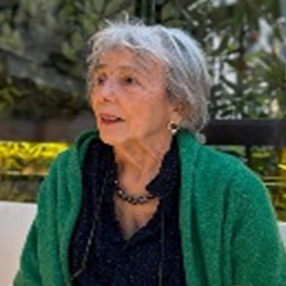
Anne Alvarez, PhD, M.A.C.P is a Consultant Child and Adolescent Psychotherapist (and retired Co-Convener of the Autism Service, Child and Family Dep't. Tavistock Clinic, London, where she still teaches.). She is author of Live Company: Psychotherapy with Autistic, Borderline, Deprived and Abused Children. and has edited with Susan Reid, Autism and Personality: Findings from the Tavistock Autism Workshop. A book in her honour, edited by Judith Edwards, entitled Being Alive: Building on the Work of Anne Alvarez was published in 2002. She was Visiting Professor at the San Francisco Psychoanalytic Society in November 2005 and is an Honorary Member of the Psychoanalytic Centre of California. Her latest book, The Thinking Heart: Three Levels of Psychoanalytic Therapy with Disturbed Children was published in April 2012 by Routledge. A book by Galit Gampel on Alvarez in a series on influential thinkers in psychoanalysis is in preparation for Routledge.

Graham Music is a psychotherapist, trainer, author, and supervisor. He is a Consultant Child and Adolescent Psychotherapist at the Tavistock Centre where he has worked for over 20 years, and he has been an adult Psychotherapist for about 35 years. Formerly Associate Clinical Director of the Tavistock Clinic’s Child and Family Department, he has developed many innovative programs, including setting up services in over 40 schools and a range of services working with the aftermath of child maltreatment and neglect. His clinical specialty for decades has been understanding and working with trauma. He supervises and teaches nationally and internationally and has a particular interest in linking cutting-edge developmental findings with therapeutic practice. His publications include Nurturing Natures: (2023, 2016, 2010), Respark: Igniting Hope and Joy after trauma and depression, (2022), Affect and Emotion (2022, 2001), Nurturing Children: From Trauma to Hope (2019), The Good Life: (2014) as well as co-editing From Trauma to Harming Others (2022).
Standard Online Registration: £80
Trainee, NHS staff and Third Sector: £68
Trainee and NHS Discount: To qualify for this offer you need to be taking a course which provides core practitioner training in counselling or psychotherapy that is at least 1 year full time or two years part time and recognised by the BACP or UKCP. TR Together reserve the right to ask to see evidence of training being undertaken. Please contact [email protected] to recieve the discount code.
Group Rates (for 4 or more): Contact [email protected] for customised pricing.
Alumni: If you are a TR Alumni (TRAPC member) please email [email protected] for a discount code to add at checkout
Your CPD Certificate will be available to download from your TR Together account within 48 hours of the event.